

Community-Based Early Education in Rural Tanzania
An Indigenous-Led Model for Sustainable Development
Across rural Tanzania, children face significant barriers to accessing early education. Many villages are located far from public schools, requiring young children to walk long distances or live away from their families in boarding situations. For Indigenous communities, this separation disrupts early learning, cultural continuity, and the transmission of language and identity during critical developmental years.
According to UNESCO, rural children in East Africa experience higher rates of educational exclusion due to limited infrastructure, language barriers, and economic precarity. These challenges disproportionately affect Indigenous communities whose first languages and cultural frameworks are rarely reflected in national education systems.
Humanculture is an Indigenous-led nonprofit organization founded by Stephanie Zabriskie. The organization works within Maasai communities in northern Tanzania to strengthen early education through locally designed, community-based schools. To date, Humanculture has supported the construction of ten early learning schools and provides ongoing access to books, teaching materials, and culturally relevant language tools.
A central challenge facing early learners is language. Most Tanzanian public schools teach in English and Swahili, neither of which are the first languages spoken in many Indigenous communities. Children entering school without fluency in these languages often fall behind academically and face higher dropout rates. The World Bank identifies language exclusion as one of the strongest predictors of educational inequality in rural East Africa.
To address this gap, Humanculture developed a children’s book, How Maasai Women Spoke to Cows, authored by Stephanie Zabriskie as a written retelling of a traditional Maasai oral story and developed in close collaboration with community leaders. The book emerged from time spent listening to elders and reflects knowledge held collectively within the Maasai community. It was created to preserve oral story in book form and to provide culturally rooted representation for Maasai children’s language education, while remaining grounded in its communal origin, meaning, and oral tradition.
In parallel, Humanculture partners with Read Nation to support early literacy through culturally adapted learning tools. Read Nation provides tablets, books, and school materials, and its student-led organization develops interactive, tailored language-learning content that is preloaded onto the devices. Solar charging systems installed at each school enable consistent use in communities without access to electricity. These tools are integrated into locally guided curricula to reinforce bilingual and multilingual learning that values mother-tongue fluency alongside access to national education systems.
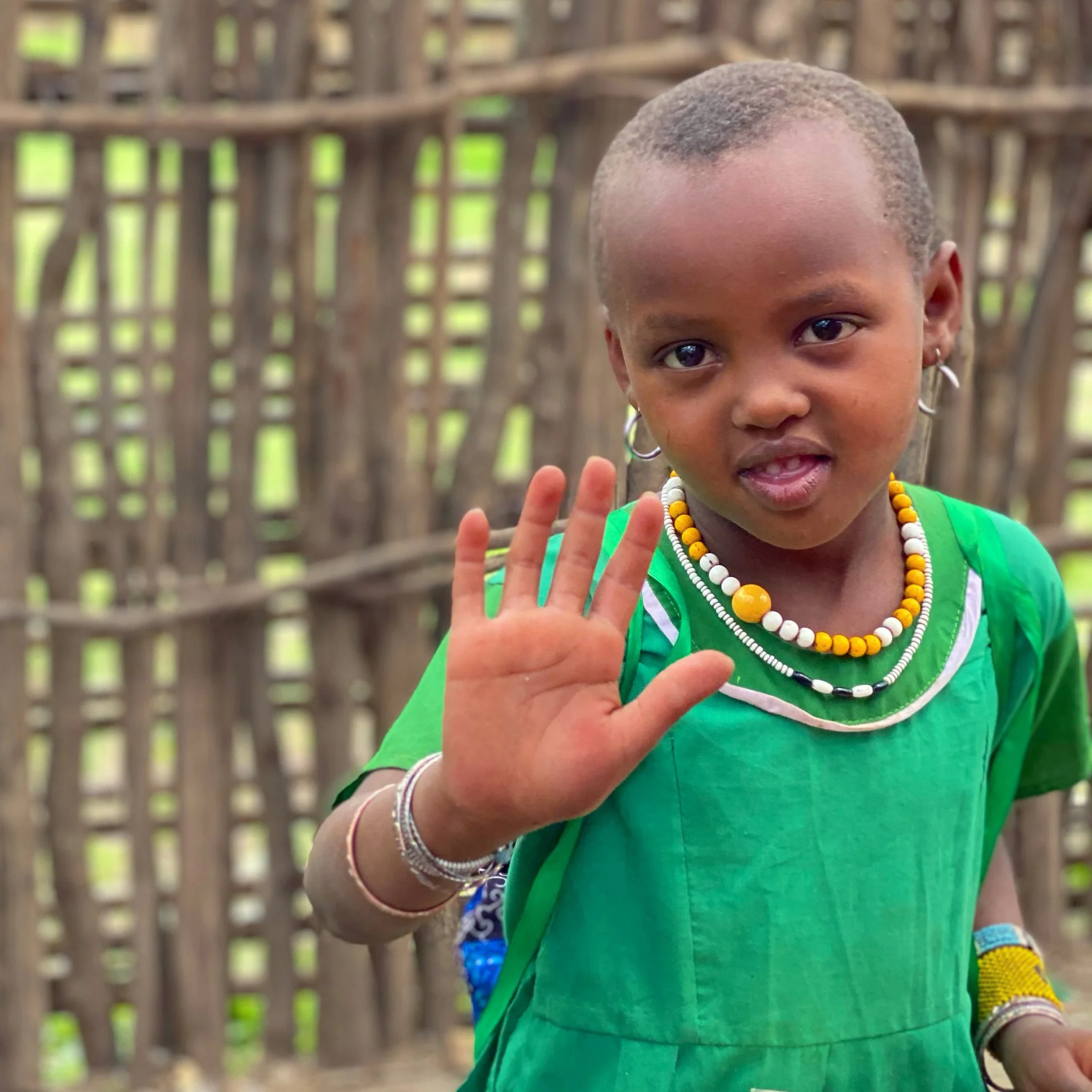
Maasai student at Humanculture rural school in Tanzania
Education delivery remains community-led. Teachers are selected from within the villages, including women who attended university and returned home to raise families. This model strengthens local employment, maintains cultural continuity, and ensures that education remains grounded in community knowledge rather than external instruction.
Early education is one component of the broader Maasai Water Project, Humanculture’s flagship initiative in Tanzania, which also supports safe water access, food systems, women’s health, and economic autonomy. Humanculture works across additional regions including Rwanda, South Africa, Madagascar, Morocco, Cambodia, and communities in Central and South America, adapting its approach to each context through Indigenous leadership and local decision-making.
Despite progress, structural barriers persist. UNICEF reports that more than 40 percent of rural children in Tanzania lack access to early childhood education, with girls facing disproportionate exclusion. Climate change, drought, and resource scarcity continue to compound these challenges for pastoral and agricultural communities.
Humanculture’s work reflects a growing recognition that sustainable development and Indigenous sovereignty are inseparable. Education, language, cultural preservation, and access to resources function as interconnected systems. Long-term resilience emerges when communities lead, design, and sustain their own futures.
About Humanculture
Humanculture is an Indigenous-led nonprofit organization advancing community-driven systems for education, safe water, food security, health access, women’s economic autonomy, and cultural preservation. The organization partners with communities across the Global South through locally led models that prioritize Indigenous knowledge, cultural continuity, and long-term sustainability.
