

UNESCO
SCIENCE
Indigenous Knowledge
Amazigh Desert Weaving
Pastoral Fiber, Shelter, and Climate Adaptation
Organization: Humanculture
Author: Stephanie Zabriskie
ORCID: 0009-0000-9273-1529
Affiliation: Humanculture (Indigenous-led nonprofit organization)
Capacity: Founder and Executive Director
Contributors: Yahya Aadjou, Amazigh Elder and Ait sl Caid Fatima, Women’s Council Leader
Country: Morocco
UNESCO Recommendation on Open Science (2021), Indigenous Knowledge Systems, Climate-Responsive Governance
OVERVIEW
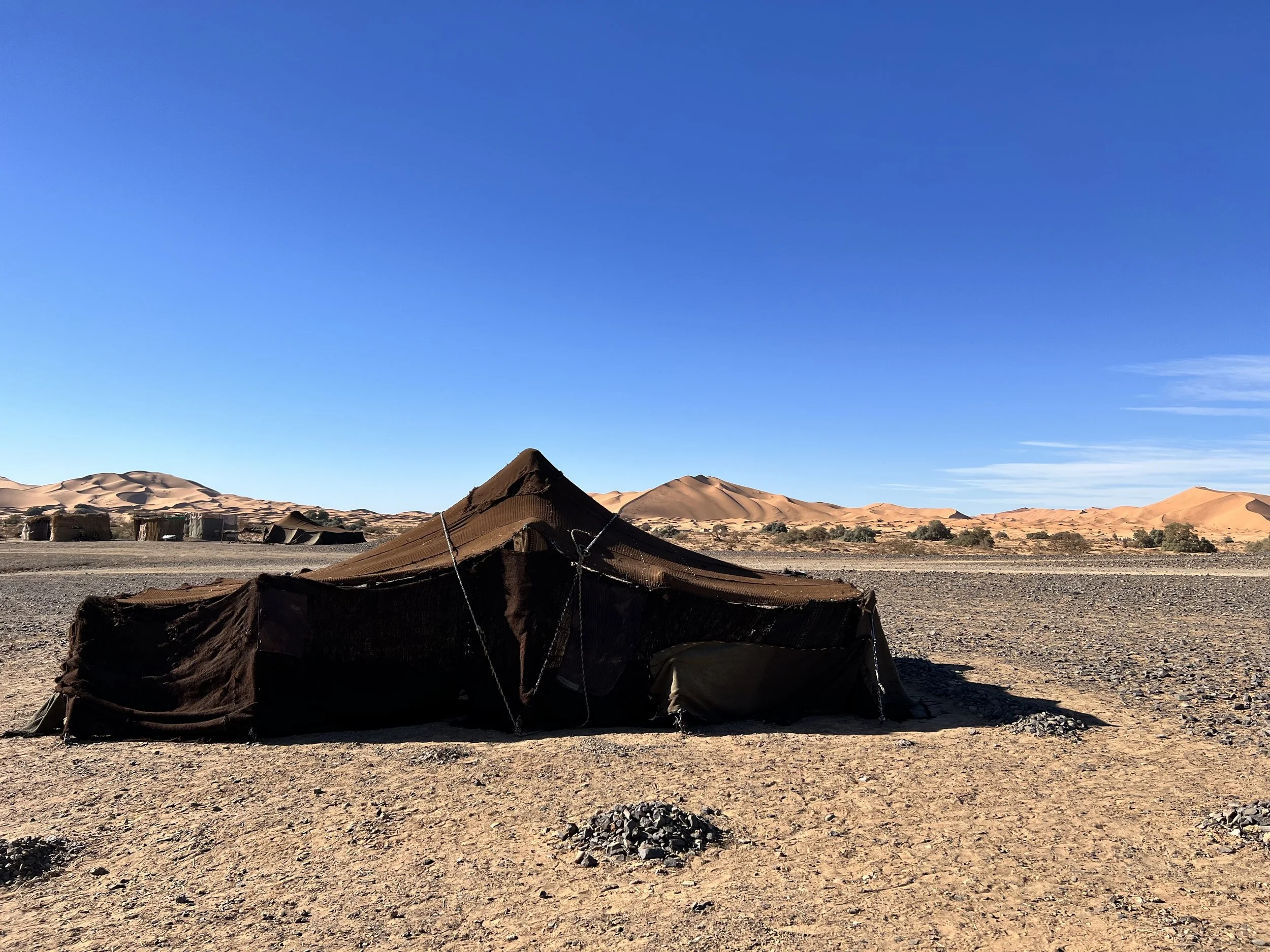
Among Amazigh pastoral communities in the Merzouga region of southeastern Morocco, weaving is not a craft separate from daily life. It is a complete knowledge system through which animal care, ecological observation, material processing, and shelter construction operate as one integrated practice. Seasonal fiber harvesting, hand spinning, loom construction, weaving, and tent assembly form a single sequence in which each stage depends on knowledge carried from the one before it.
The practice is demonstrated and transmitted by elder women practitioners who retain full-cycle expertise across the complete production sequence. One complete tent has been produced within the documented community during the project period, confirming that the full knowledge sequence remains intact and transmissible.
This page documents the Amazigh weaving system as a living Indigenous knowledge practice relevant to open and inclusive science.
Ecological Knowledge and Environmental Observation
Environmental observation is not a preliminary step in this system. It is embedded throughout the entire practice. Practitioners read seasonal conditions to determine when animal fibers are ready for harvesting. Fiber quality varies with season, animal health, and ecological conditions, and assessment is made through direct sensory evaluation rather than standardized measurement.
Weather conditions guide processing and drying decisions. Weaving density and fiber content are determined in relation to the climatic performance required of the finished shelter. This requires practitioners to hold knowledge of material behavior, ecological conditions, and shelter performance simultaneously. This form of community based environmental sensing emerges through sustained interaction between people, animals, materials, and climate. It is a core feature of the knowledge system and central to its relevance for open science.
Knowledge Production Sequence
The transformation from animal fiber to functional shelter involves a sequence of specialized and interdependent practices:
-

Fiber Harvesting
Goat hair, and in some cases sheep or camel fiber, is harvested seasonally when temperatures warm and animal coats are ready. Timing is guided by ecological observation and practitioner judgment.
-

Fiber Preperation
Raw fibers are cleaned and aligned using hand tools, separating and preparing them for spinning. Animal fat is applied to protect practitioners’ hands during the physically demanding preparation and weaving stages.
-

Spinning
Prepared fibers are hand spun into thread suited to structural weaving rather than decorative textile production.
-

Loom construction
Looms are constructed and tensioned according to established methods requiring coordinated participation by multiple women to achieve correct alignment and tension across the structure.
-

Weaving
Woven panels are produced through sustained manual control of fiber tension, alignment, and density. A metal weaving comb beats each row into place. Mastery requires years of practice to develop the physical skill and material judgment the process demands.
-

Tent Assembly
Completed woven panels are assembled into mobile desert shelters. The structural integrity and climatic performance of the finished dwelling depend on the knowledge embedded in each preceding stage of the process.
Women and Girls as Knowledge Holders
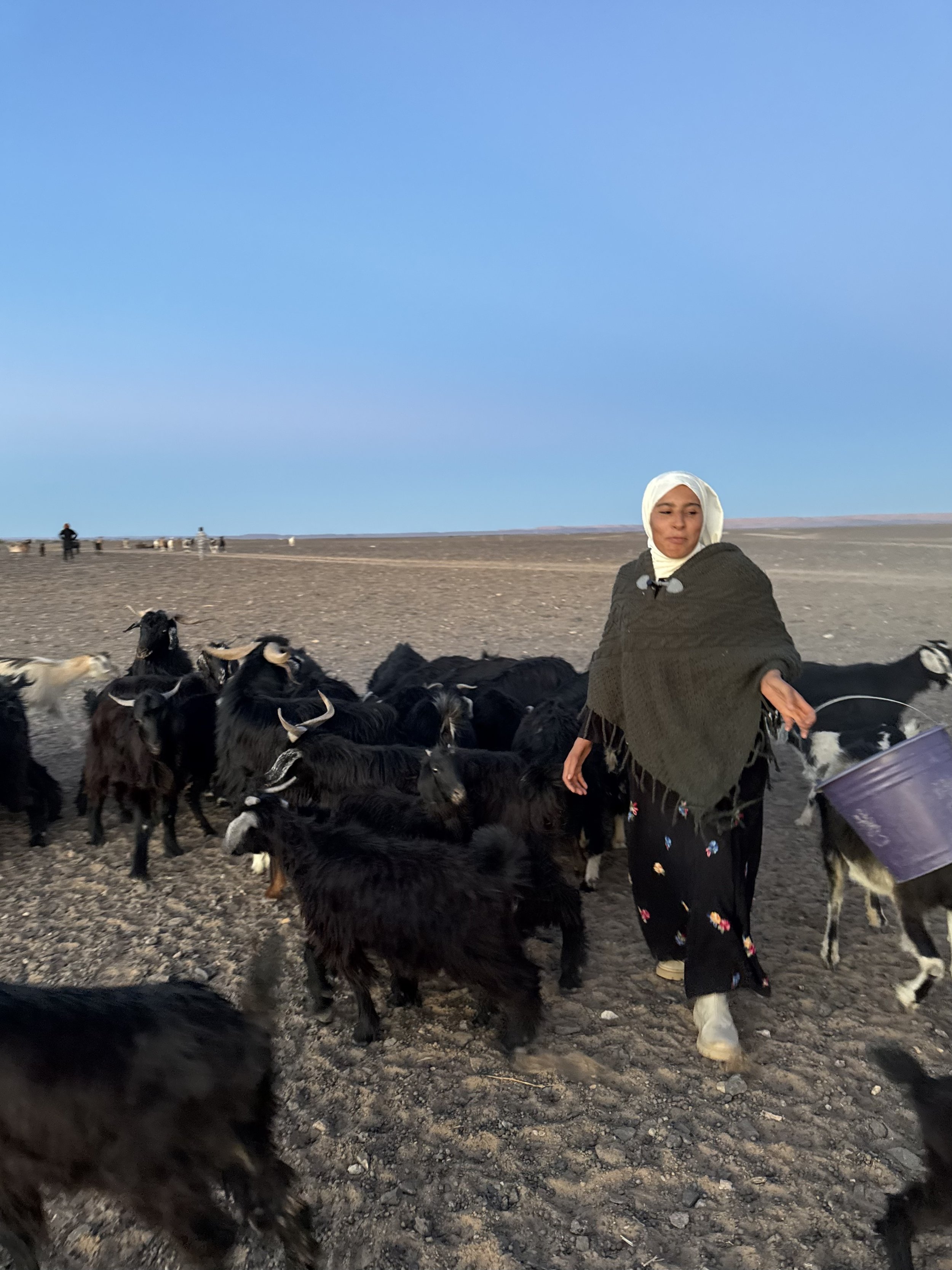
In this Amazigh weaving system, women and girls are the primary knowledge holders responsible for maintaining the full production cycle of fiber, textile, and shelter.
Knowledge moves through female lineage from elder women who hold expertise across fiber preparation, spinning, loom construction, and weaving, Girls learn through daily participation alongside mothers and grandmothers as they gradually take on each stage of the process.
Women’s knowledge begins with the animals. Goat care directly determines fiber quality, and women monitor herd health through daily care routines while also caring for young animals that remain at the encampment. Through this work, animal stewardship, fiber knowledge, and textile production remain part of a single integrated system.
Women also manage the seasonal production sequence. Hair is harvested as temperatures warm, and weaving must be completed before the wet season arrives so that the tent structure is in place when environmental conditions change. This sequence requires continuous knowledge of animal cycles, seasonal conditions, and the time required for each stage of production.
Climate Responsive Textile
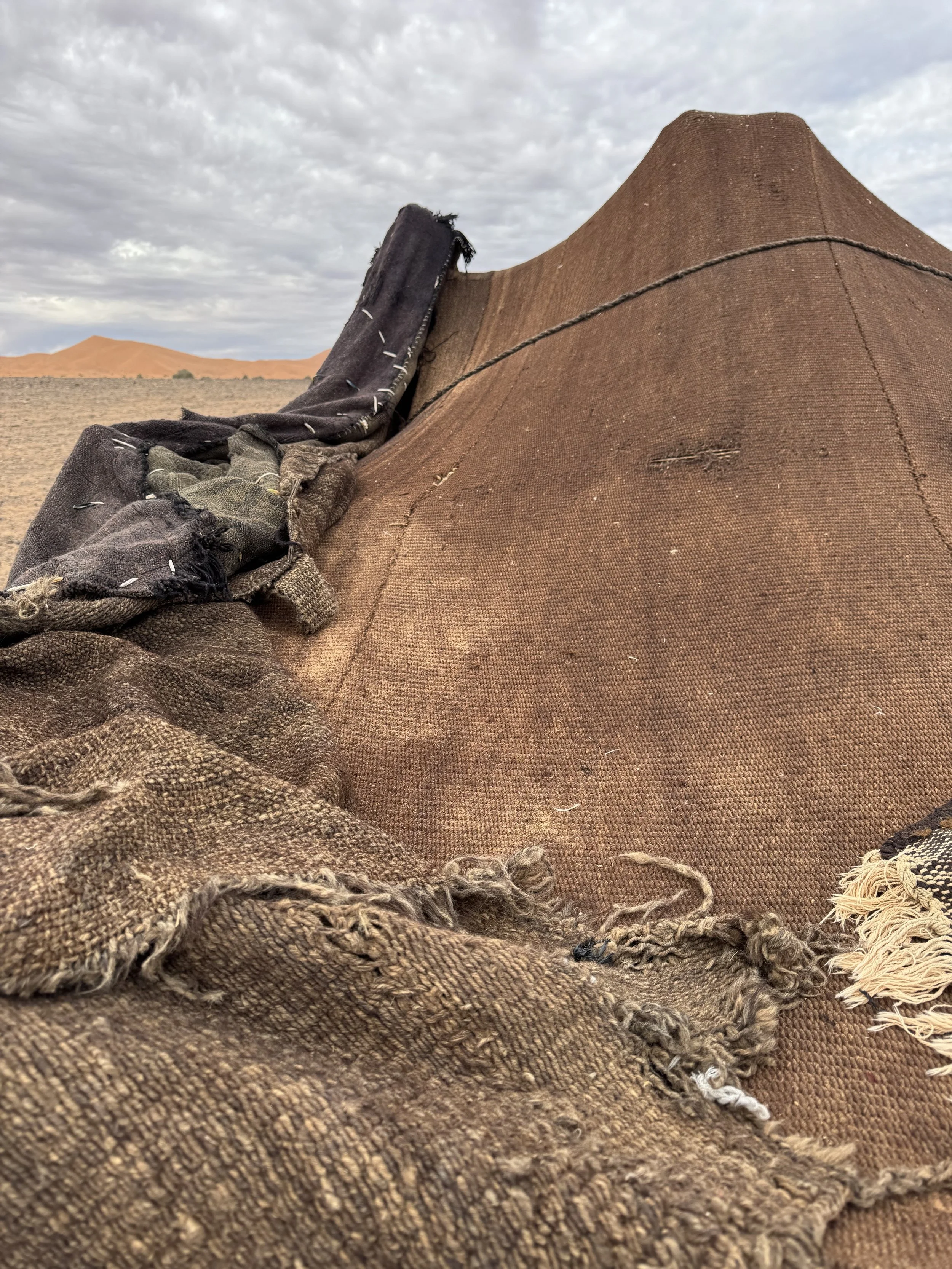
The woven fabric produced in this system is not decorative textile. It is structural material produced through specialized knowledge of fiber behavior and environmental conditions. Goat hair fibers are woven at densities determined by the practitioner’s understanding of how the finished material will perform under specific desert conditions. Fiber content, twist, tension, and weaving density operate together to produce a textile with climate responsive properties that cannot be reproduced through industrial substitution.
The fabric expands when wet, as fibers swell and close the weave to seal against rain. In dry heat the same material contracts, opening the weave to allow ventilation. These properties are not added through treatment or finishing. They emerge from the relationship between material selection, fiber preparation, and weaving practice. A practitioner who does not understand fiber behavior, seasonal variation, and the relationship between weave density and climatic performance cannot produce fabric that functions in this way.
Climate Responsive Architecture
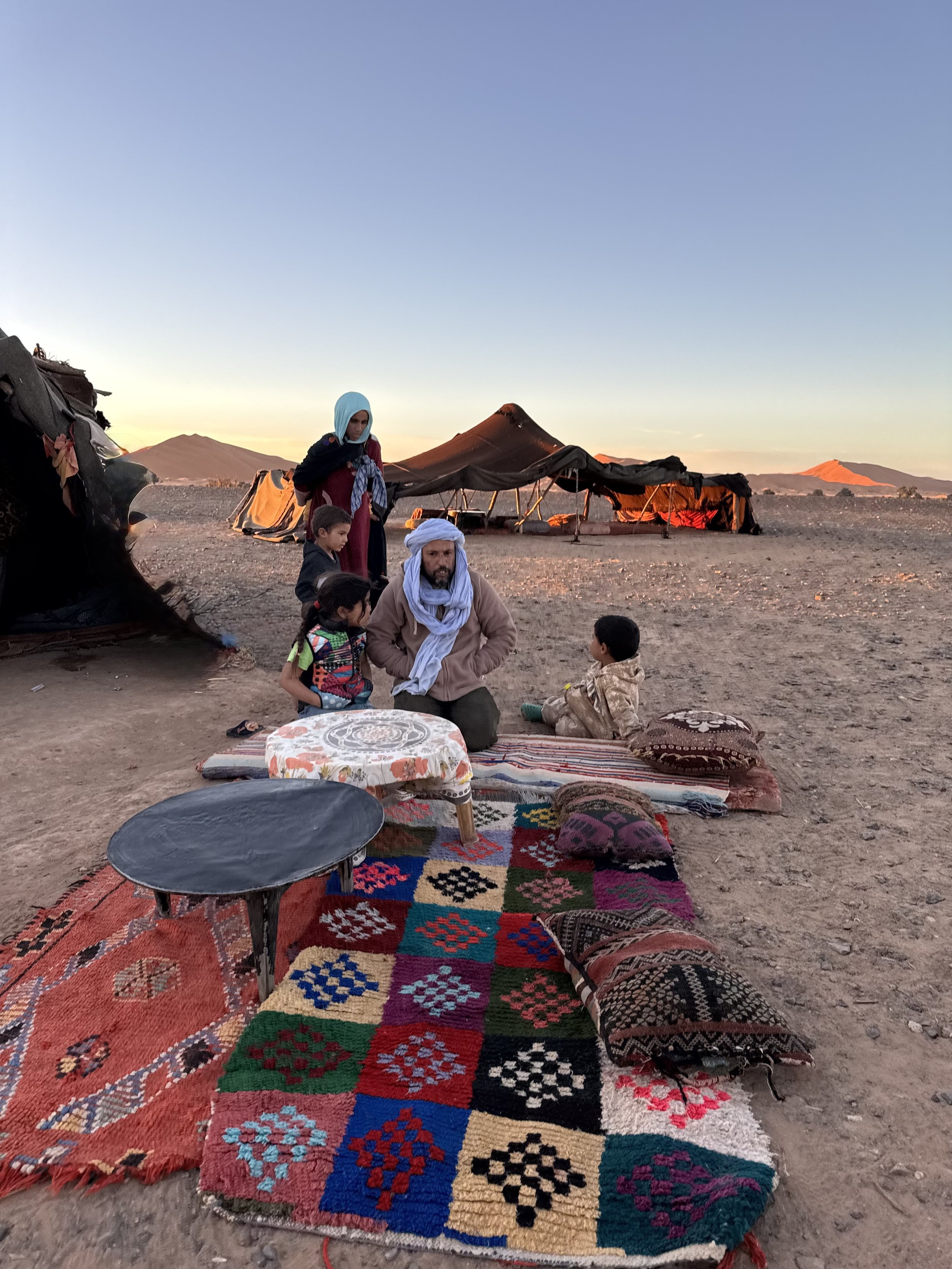
Women hold and transmit the knowledge through which textile production becomes dwelling construction. In this system, weaving is not separate from shelter-making: the same work that produces the fabric produces the tent itself. Because women also organize the interior life and daily functioning of the household, textile production and domestic architecture remain part of one continuous system rather than separate activities.
The completed Amazigh tent is climate responsive architecture produced through this fabric knowledge. Woven panels are assembled into mobile desert shelters that must endure heat, wind, and seasonal weather while remaining portable and suited to pastoral life. The performance of the shelter as a whole is therefore a direct measure of the knowledge embedded in each stage of its making, from fiber harvesting through weaving to final assembly.
Practitioners describe and evaluate the behavior of both fabric and shelter in relation to environmental conditions. Through this process they demonstrate that material knowledge, architectural knowledge, and ecological knowledge operate together as one integrated system.
Knowledge Transmission
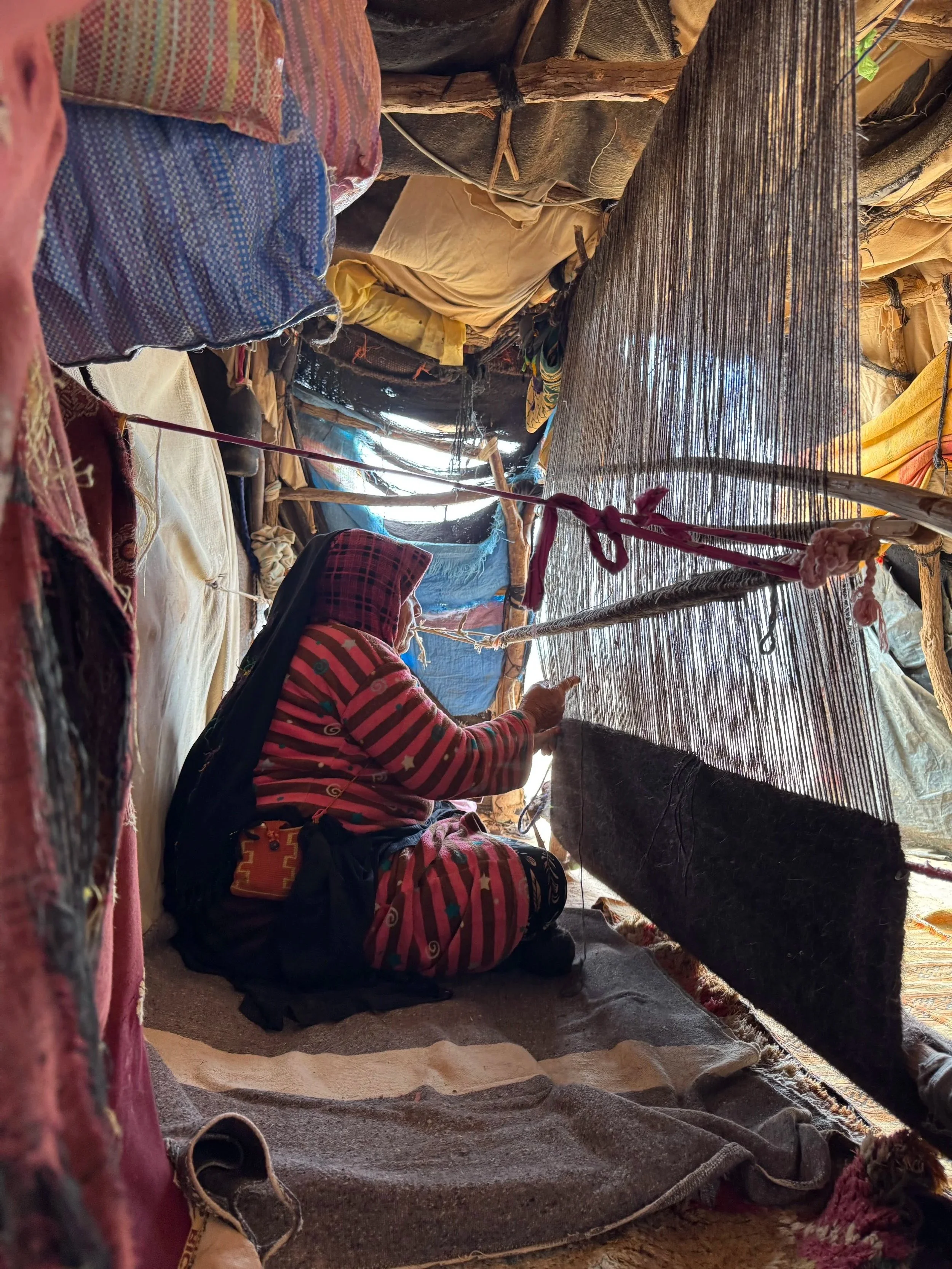
Knowledge in this system is transmitted across generations through participation in daily pastoral and household life. Younger community members learn by observing, assisting, and gradually taking part in each stage of the production cycle alongside experienced elder practitioners.
Elder women knowledge holders play a central role not only in technical execution but in seasonal judgment, material recognition, and the evaluation of whether a finished textile will perform as required. This knowledge is embodied. It lives in hand technique, timing, pressure, and the ability to assess fiber and weave quality through direct sensory engagement developed over years of practice.
Because transmission depends on lived participation alongside experienced practitioners, it requires the continued presence of social conditions that make learning meaningful. Where those conditions weaken, transmission risk can emerge even when the knowledge itself remains intact.
Contribution to Open and Inclusive Science
The Amazigh weaving system demonstrates several principles directly relevant to open and inclusive science:
Inclusive knowledge production - Women and girlserve as primary knowledge holders within the system, contributing animal care, fiber assessment, weaving knowledge, seasonal planning, and intergenerational transmission as integral participants in the production of textile, shelter, and domestic life.
Plural knowledge systems — The practice shows that knowledge can be observational, technical, material, ecological, and architectural simultaneously, produced through community practice rather than formal institutional systems alone.
Community-based knowledge production — Environmental observation, material assessment, and production decisions are made collectively through lived practice and intergenerational participation.
Embodied and intergenerational knowledge — Technical knowledge exists in physical skill, seasonal judgment, and practitioner experience transmitted through participation rather than written documentation.
Climate-responsive knowledge in practice — The system produces adaptive, climate-responsive material solutions through long-term ecological interaction, demonstrating that locally held Indigenous knowledge generates practical responses to environmental conditions.
Responsible knowledge visibility — This documentation recognizes practitioners, community context, and knowledge sovereignty, presenting the system in a way that supports visibility without detaching the practice from the community that sustains it.